
Marine Compass Technology for Modern Navigation
Marine Compass Technology remains essential for safe and accurate navigation. Learn how modern and traditional marine compasses improve boating performance and reliability.
7/10/20268 min read


Introduction to Marine Compass Technology
The marine compass, a pivotal instrument in maritime navigation, has a fascinating history that underscores its significance in guiding sailors and explorers across the vast oceans. The earliest compass, believed to have been invented in China during the Han Dynasty around the 2nd century BC, utilized lodestones, naturally magnetized minerals that would align with the Earth’s magnetic field. This innovation marked the dawn of magnetic navigation, enabling mariners to determine cardinal directions even when out of sight of land.
Over the centuries, the design of the marine compass evolved significantly. By the 13th century, compasses improved in accuracy and usability, with developments such as the introduction of the magnetic needle being enclosed in a housing. This advancement facilitated better stability and reduced the impact of external disturbances, making the compass an even more reliable tool for navigation at sea. The mariner's compass became essential for voyages, especially during the Age of Exploration, as many explorers ventured into unknown waters that lacked the visibility of coastal landmarks.
The role of marine compasses continued to expand with the advent of the sextant and other navigational aids, yet the compass remained an indispensable tool for both commercial and recreational sailing. Prior to the emergence of advanced technologies like the Global Positioning System (GPS), sailors relied heavily on the magnetic compass for safe passage across dangerous seas and treacherous routes. It not only aided in direction finding but also established the foundational principles on which modern navigation is built.
Even in an era dominated by sophisticated technologies, the marine compass retains its relevance. Its simple yet effective mechanism represents the enduring legacy of humanity’s quest for exploration and the need for reliable navigation, a testament to the remarkable engineering that continues to benefit mariners today.
The Mechanics of Magnetic Compasses
Magnetic compasses have been an integral part of navigation for centuries, relying on fundamental physical principles to provide direction at sea. Central to the functioning of a magnetic compass is the Earth’s magnetic field, an invisible force generated by the movement of molten iron within the planet's outer core. This geomagnetic field resembles that of a giant bar magnet, with magnetic north and south poles. The compass needle is essentially a small magnet, which aligns itself with the Earth’s magnetic field, pointing towards magnetic north.
The compass needle consists of a lightweight metal that is magnetized, allowing for quick responsiveness to the magnetic forces at play. When the compass is held horizontally, the needle pivots freely on a pivot point so that it can rotate horizontally until it finds equilibrium with the Earth’s magnetic lines of force. As a result, the end of the needle that is marked as north will point towards the Earth’s magnetic north pole, enabling navigators to establish a reference direction.
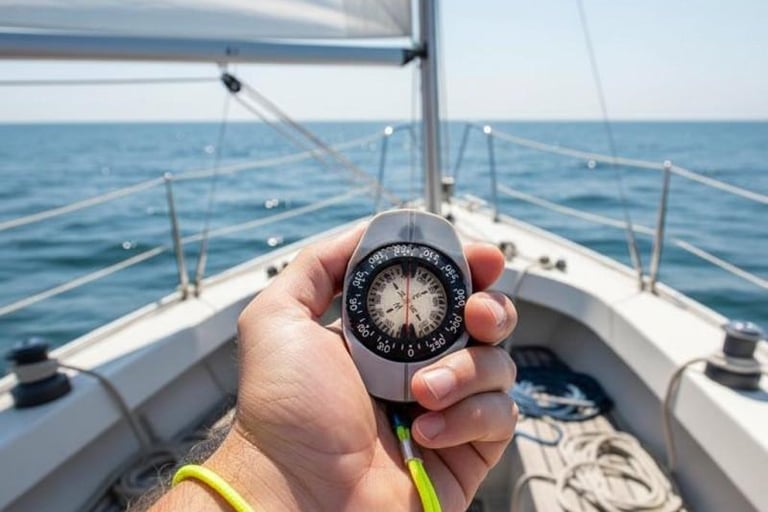
Furthermore, for improved accuracy, many magnetic compasses also feature additional components, such as a compass card and lubber line. The compass card is marked with the cardinal directions and degrees, providing navigators with a visual reference for heading. The lubber line on the compass housing helps ensure that course readings are aligned with the vessel’s bow, allowing for precise tracking of direction. It's imperative for navigators to consider deviations that may arise from local magnetic anomalies and the influence of nearby metallic objects, which could affect the accuracy of readings.
Overall, the mechanics of magnetic compasses underscore their importance in navigation, harmonizing easily with the Earth’s magnetic properties to deliver reliable directionality for mariners traversing the vast oceans.
Types of Marine Compasses and Their Applications
Marine compasses are essential instruments in maritime navigation, each type featuring distinct principles of operation and specific applications. The three most prevalent types of marine compasses include magnetic compasses, gyrocompasses, and fluxgate compasses. Understanding these compasses and their functions is crucial for effective navigation on the water.
The magnetic compass is arguably the oldest and most well-known type of compass. It operates on the principle of magnetism, utilizing a magnetized needle that aligns itself with the Earth's magnetic field. This type of compass is favored for its simplicity, low cost, and ease of use. However, it as well has limitations, including susceptibility to magnetic interference from nearby metal objects or electronic devices, which can lead to navigational inaccuracies.
In contrast, the gyrocompass uses the principles of gyroscopic motion to maintain its orientation and is not affected by magnetic fields. This compass is particularly advantageous in high-latitude regions and on large vessels, as it provides a stable and accurate reference for true north. Gyrocompasses are typically used on ships and submarines, yet they require a source of power and take a longer time to stabilize compared to magnetic compasses.
Another modern alternative is the fluxgate compass, which employs magnetic sensors to determine heading. This type compensates for external magnetic interference, making it suitable for use in environments where a magnetic compass would fail. Fluxgate compasses are commonly integrated into electronic navigation systems and are valued for their accuracy and reliability. However, they are often more complex and expensive than magnetic compasses.
Each of these marine compass technologies has its unique advantages and limitations, influencing their applications in different navigational contexts. Selecting the appropriate compass type is imperative for ensuring effective and safe marine navigation.
The Importance of Accurate Navigation at Sea
Accurate navigation is fundamentally crucial for a variety of maritime activities, encompassing commercial shipping, fishing, and recreational boating. In the vast expanse of the ocean, precise navigational tools and technologies are vital for ensuring the safety of vessels, crew, and cargo. Without reliable navigation, the risk of maritime accidents increases significantly, leading to potential loss of life, property damage, and environmental harm.
In commercial shipping, companies depend heavily on accurate navigation to optimize routes, reduce fuel consumption, and ensure timely deliveries. This leads to not only enhanced efficiency but also minimized operational costs, which are crucial in maintaining competitiveness in the global market. Each degree of misdirection can result in considerable economic repercussions, making accurate navigation integral to business operations.
Similarly, for the fishing industry, understanding and navigating marine environments accurately is essential for successful catch rates and safety. Fishermen must adhere to specific locations and conditions where various species are abundant, and precision in these navigational practices can determine the viability of their commercial returns. Additionally, familiarization with local maritime regulations is essential to ensure compliance and safety.
Even in recreational boating, a segment that includes sailing, yachting, and leisure cruising, accurate navigation is indispensable. Boaters must navigate unpredictable weather conditions, changing tides, and potential obstacles while ensuring their own safety and the enjoyment of their passengers. Employing reliable navigation tools can make the difference between a pleasurable outing and a potentially hazardous situation at sea.
Thus, the importance of accurate navigation cannot be overstated, as it plays an essential role in enhancing safety, improving operational efficiency, and ensuring the success of various maritime activities.
How Traditional Techniques Complement Modern Technology
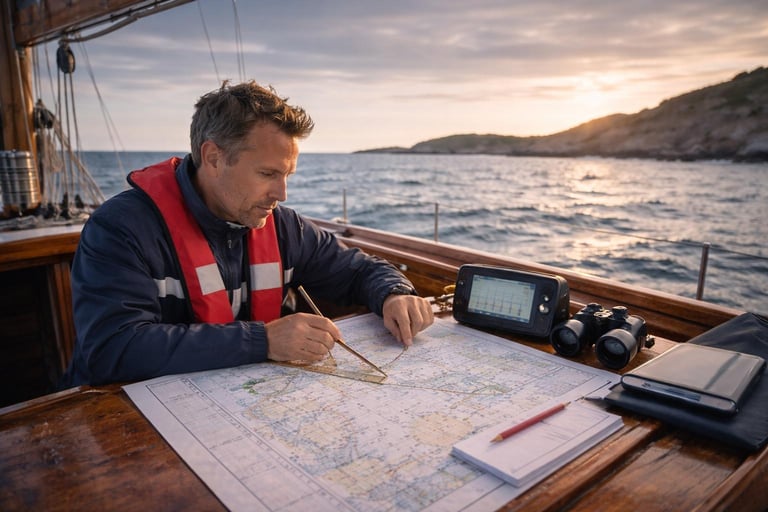
In the realm of navigation, there exists a pivotal relationship between traditional tools and the technology that has emerged in recent years. Specifically, the marine compass, a time-honored navigation instrument, continues to play a crucial role in maritime navigation despite the advent of sophisticated systems like GPS and electronic navigation tools. This synergy between age-old techniques and cutting-edge technology enhances navigational safety and reliability.
The use of a marine compass provides a fundamental understanding of cardinal directions and natural navigation principles. Unlike GPS, which relies on satellites and electronic signals susceptible to interference, a compass functions independently of electronic systems. As such, it serves as an invaluable backup during instances of technology failure or in areas where electronic navigation systems may be unreliable due to poor signal strength, such as remote oceans or regions with dense foliage.
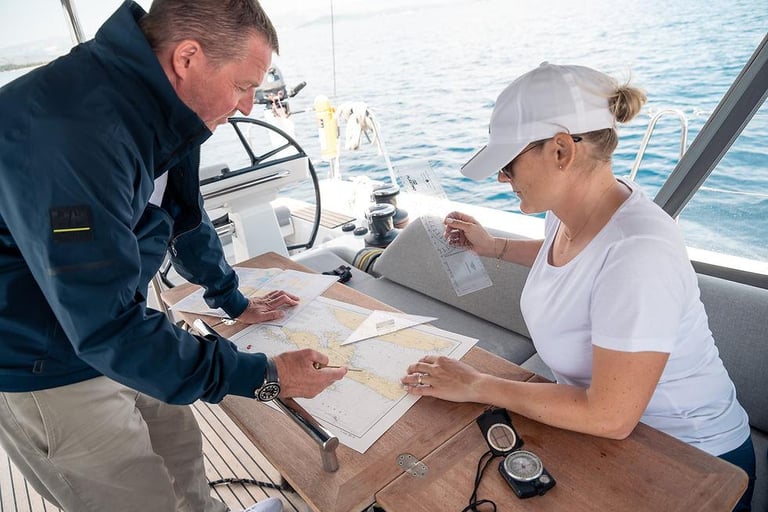
Furthermore, traditional navigation techniques foster a keen awareness of the natural environment. Mariners trained in using a compass can interpret subtle changes in the horizon, weather patterns, and ocean current behaviors that are often overlooked in technology-driven navigation. Combining these observations with data from GPS and electronic systems empowers sailors to make more informed decisions while at sea. Recognizing one’s position and direction through both traditional and modern methods creates a more comprehensive approach to navigation, emphasizing the necessity of maintaining proficiency in these enduring techniques.
Moreover, educational institutions and maritime training programs increasingly highlight the importance of traditional navigation tools, particularly in holistic training. New generations of mariners are encouraged to master both the compass and modern technologies. This dual proficiency not only deepens their understanding of navigation but also prepares them for any navigational challenges that may arise. By embracing both methods, navigators can enhance their skill set, ensuring safe and effective travel across the seas.
Challenges Faced by Marine Navigators Today
Despite the significant advancements in maritime technology, marine navigators continue to encounter numerous challenges that can complicate their navigation efforts. One of the primary issues is electronic failure, which can arise from various factors such as power outages, software malfunctions, or degraded hardware. Modern vessels increasingly rely on electronic navigational tools, including GPS and electronic chart systems. While these technologies provide an enhanced level of accuracy, their dependence on electronic systems also creates a vulnerability. When these systems malfunction, mariners must revert to traditional navigational techniques, which may not always be as reliable, particularly in critical situations.
Another prevalent challenge is magnetic interference, which can severely impact compass readings. The presence of nearby metal structures, electronic devices, or even natural magnetic variations can distort compass readings, leading to navigational errors. This is particularly concerning in crowded shipping lanes or near ports where various man-made elements can interfere with compass functionality. Navigators must be skilled in recognizing when such interference might be affecting their navigation instruments and adjust accordingly.
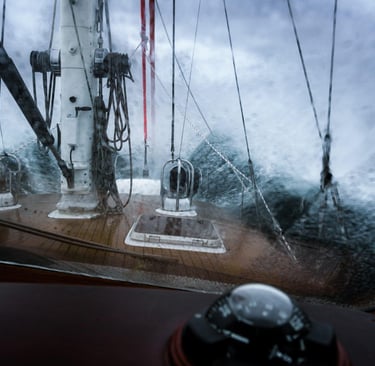
The environmental conditions at sea pose yet another challenge for marine navigators. Weather events, including storms and fog, can significantly hinder visibility and make accurate navigation more difficult. Furthermore, ocean currents and tides can alter a vessel's intended course, demanding skillful adaptation from the navigator. The capacity to assess environmental elements and make real-time adjustments is crucial in maintaining the safety of both the vessel and its crew.
In summary, while modern advancements have improved navigation, marine navigators must contend with electronic failures, magnetic interference, and environmental challenges that can complicate their journey across unpredictable waters.
Conclusion: The Future of Marine Compass Technology
The future of marine compass technology is marked by an intriguing interplay of traditional navigation principles and modern innovations. As maritime navigation continues to evolve with advancements in electronic systems, the compass retains its significance as a reliable tool for seafarers. Even with the prevalence of digital navigation tools, including GPS and electronic chart systems, the marine compass remains a fundamental component of maritime safety.
In recent years, there has been a resurgence of interest in traditional navigation techniques, especially in light of the increasing susceptibility of electronic systems to failures or environmental interferences. This has led to innovations in compass technology, making them more reliable, compact, and integrated with modern instruments. For instance, developments in digital magnetic compass technology have enabled enhanced accuracy and ease of use, ensuring that navigators have access to precise heading information while still harnessing the reliability of a traditional compass.
Moreover, as the marine industry shifts toward sustainability, compass technology is adapting. Innovations focus on reducing the environmental impact of manufacturing processes while enhancing the durability and efficiency of compass instruments. Companies are investing in research and development to ensure that compass technology not only aligns with the requirements of modern navigation but also adheres to eco-friendly practices.
Ultimately, the enduring relevance of the compass in marine navigation exemplifies its role as an indispensable tool for ensuring safe and accurate journeys at sea. By bridging the gap between traditional and contemporary methods, the marine compass will continue to serve as a trusted guide for future generations of navigators, reinforcing the belief that, regardless of technological advancement, the fundamentals of navigation must always be respected and preserved.





Get in touch
Address
3721 Single Street
Weihai, Shandong, China
Contacts
+856 20 97 510 070
yacht.business48@gmail.com