
Marine Materials | Stronger & Lightweight Solutions
Explore advanced marine materials engineered to improve structural strength, reduce overall weight, resist corrosion in harsh marine environments, and enhance the long-term durability, safety, and performance of boats and yachts. Discover innovative composites, marine-grade alloys, reinforced polyme
7/15/20268 min read


Introduction to Marine Materials
Marine materials are crucial elements in the construction and performance of vessels, encompassing everything from yachts to cargo ships. Traditionally, materials such as steel and wood have been the cornerstone of maritime engineering. Steel offers remarkable strength, making it ideal for large vessels that navigate challenging sea conditions, while wood provides a classic aesthetic and certain buoyancy characteristics. However, both materials come with limitations, including weight and susceptibility to factors like corrosion and decay.
Over the years, the marine industry has witnessed significant advancements in materials science. The evolution from traditional materials to modern composites, such as fiberglass and carbon fiber, marks a significant turning point. These innovative marine materials not only enhance vessel performance by reducing weight, but they also afford improved durability and resistance to harsh marine environments. Composites, for instance, exhibit excellent tensile strength while being remarkably lightweight, allowing for increased fuel efficiency and higher payload capacities.
Furthermore, marine materials are now being developed with sustainability in mind. With the growing emphasis on environmentally friendly practices, materials derived from recycled inputs or sustainable sources are gaining traction. This change reflects a broader industry trend towards reducing the environmental impact throughout the vessel’s lifecycle, from construction through to decommissioning. Innovative coatings and treatments are also being designed to further enhance the longevity of marine materials, minimizing the need for maintenance and repairs.
This introduction to marine materials sets the stage for discussing the newest innovations that continue to reshape the construction and performance of marine vessels. As we delve deeper, the advantages offered by these modern materials will be examined, illustrating how they serve not only to enhance strength and reduce weight but also to improve overall functionality on the water.
Advancements in Material Science
Recent developments in material science are reshaping the landscape of marine engineering and extending the possibilities of vessel performance. Innovative materials with enhanced properties are being synthesized to meet the demands of modern maritime applications. Among these, composite materials, lightweight metals, and advanced polymers are making significant inroads.
Composite materials, particularly fiber-reinforced polymers (FRP), have gained popularity due to their superior strength-to-weight ratio. These materials consist of a polymer matrix reinforced with fibers, typically glass or carbon, providing excellent tensile strength while being considerably lighter than traditional materials like steel. This reduction in weight not only leads to improved fuel efficiency for vessels but also enhances overall speed and maneuverability.
In addition to composites, lightweight metals, such as aluminum and titanium alloys, are being increasingly adopted in marine applications. Aluminum offers a compelling combination of lightweight and corrosion resistance, making it an ideal choice for hulls and superstructures. Meanwhile, titanium, though more expensive, provides exceptional strength and unparalleled resistance to seawater corrosion, making it suitable for high-performance vessels and specialized applications. The use of these metals allows for the construction of vessels that can withstand harsh marine environments while minimizing maintenance needs.
Moreover, advancements in polymer technology are noteworthy. Engineering polymers like polyether ether ketone (PEEK) and polyamide are being used for various components due to their high strength, temperature resistance, and chemical stability. These materials are often employed in areas such as valve components, bearings, and even hull coatings, contributing to enhanced vessel durability and longevity.
This new generation of materials demonstrates significant promise for the maritime industry, allowing for designs that not only meet operational requirements but also address sustainability concerns. As material science continues to evolve, these advancements will likely play a critical role in the next wave of marine innovations.
Strength Enhancement in Marine Applications
In recent years, the marine industry has witnessed significant advancements in material science that have dramatically improved the structural integrity and performance of vessels. These innovations in marine materials are primarily geared towards enhancing strength while also addressing weight considerations. One such material that has garnered attention is carbon fiber reinforced polymer (CFRP), known for its exceptional strength-to-weight ratio. Studies indicate that CFRP can enhance the strength of composite hulls, allowing for lighter construction which directly contributes to improved fuel efficiency and speed.
Moreover, engineers have begun integrating advanced engineering techniques such as finite element analysis (FEA) to predict how new materials will behave under various environmental stresses. This predictive ability enables designers to optimize hull shapes and structural components, maximizing strength while minimizing excess weight. Testing results have shown that vessels constructed with these innovative materials can handle harsher sea conditions, thereby improving safety and performance.
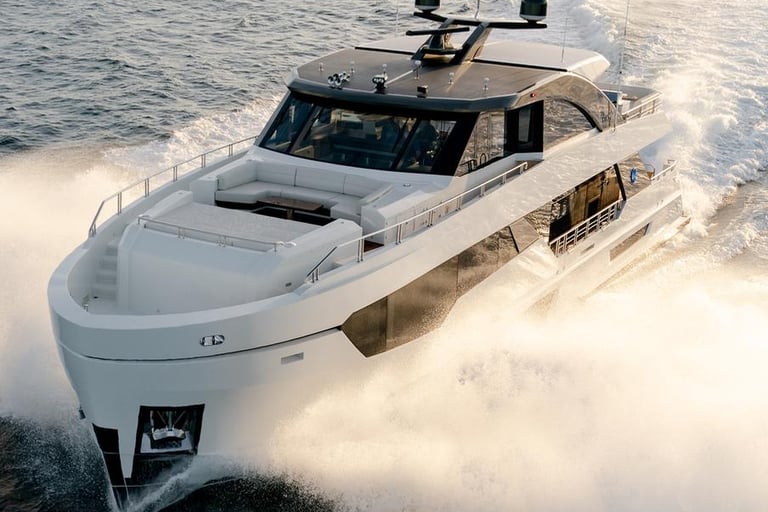
Real-world applications exemplify these advancements. For instance, the recent construction of the luxury yacht "Sailing Vessel Innovator," which utilizes a composite hull made from hybrid materials, showcases the practical benefits of these innovations. The vessel not only displays enhanced strength but also achieves a notable reduction in weight, resulting in improved hydraulic efficiency during navigation. Similarly, commercial ships are increasingly adopting aluminum-lithium alloys, which further enhance strength without adding significant weight, yielding a more efficient fuel consumption profile.
Collectively, these advancements in marine materials and engineering techniques demonstrate a promising future for vessel design and construction. The incorporation of high-strength composites and advanced alloys marks a pivotal shift in marine applications, providing tangible benefits in terms of durability, safety, and performance across all types of marine vessels.
Weight Reduction Strategies
The maritime industry has increasingly focused on innovative weight reduction strategies to enhance the performance of marine vessels. By utilizing advanced materials, such as high-strength composites and lightweight alloys, manufacturers are able to significantly decrease the overall weight without compromising structural integrity. This reduction is essential as it directly contributes to improved fuel efficiency, increased speed, and enhanced maneuverability, which are critical factors in marine vessel performance.
High-strength composites, often made from carbon fiber or fiberglass, offer remarkable strength-to-weight ratios when compared to traditional materials like steel or aluminum. These composite materials not only lower the weight of vessels but also provide better resistance to corrosion, which extends the service life of ships. Additionally, the introduction of aluminum alloys has further optimized weight reduction efforts, as these materials are durable yet considerably lighter than their steel counterparts.
The implications of weight reduction extend beyond the initial construction of the vessel. Lighter vessels require less energy to propel, leading to significant savings in fuel consumption. For instance, a decrease of even a few tons in a vessel’s weight can translate into considerable savings over the long term as lower fuel expenditures are realized. Furthermore, a lighter vessel can achieve higher speeds with the same amount of power, which is particularly advantageous in competitive marine applications.
Moreover, as regulations around emissions and fuel efficiency become more stringent, weight reduction strategies have gained critical importance. By incorporating innovative materials and designs, vessel builders are developing cutting-edge solutions that not only enhance operational capabilities but also address environmental concerns, paving the way for more sustainable practices in the shipping industry. Through these advancements, the maritime sector is setting a trend towards a future where efficient and robust vessels can be both environmentally friendly and high performers.
Performance Enhancements
In the realm of marine engineering, performance is a crucial aspect influencing the overall effectiveness and efficiency of vessels. Recent innovations in marine materials have demonstrated significant advancements in enhancing vessel performance through improved strength, reduced weight, and increased durability. These properties play an integral role in key performance metrics such as speed, maneuverability, and the ability to withstand the harsh conditions often encountered in marine environments.
Firstly, the reduction of weight through the use of advanced materials, such as carbon fiber reinforced plastics and lightweight composites, has allowed for greater speed and efficiency. Lighter vessels require less propulsion power, enabling them to achieve higher speeds with lower energy consumption. This can significantly reduce operational costs, making a compelling case for the adoption of such innovative materials in vessel construction.
Moreover, the enhanced strength provided by modern marine materials contributes to improved maneuverability. Vessels constructed with high-strength materials are better equipped to endure the stresses of high-speed navigation and tight turning maneuvers. This not only allows for improved handling but also increases safety during operations. The agility afforded by lightweight and strong materials enhances the vessel's ability to respond to dynamic marine conditions, ensuring optimal performance.
Durability is another vital aspect influenced by new materials. Many modern composites offer excellent resistance to corrosion, fatigue, and impact, which are crucial for maintaining the integrity of vessels in aggressive marine environments. This resilience not only prolongs the lifespan of the vessel but also reduces maintenance and repair costs, resulting in greater overall performance and reliability.
Sustainability and Environmental Impact
The marine industry is increasingly recognizing the need for sustainable practices, particularly in the selection and utilization of materials that contribute to environmental sustainability. New innovations in marine materials are pivotal in addressing pressing environmental concerns, such as recyclability and carbon footprint reduction. With growing pressure to adhere to environmental regulations and the overarching push towards sustainable development, the adoption of environmentally friendly materials is becoming a necessity for shipbuilders and marine manufacturers.
One of the most significant advancements in marine materials is the development of recyclable composites. Unlike traditional materials that can take centuries to decompose, these new composites can be repurposed at the end of their lifecycle, significantly reducing marine waste. The potential for recyclability not only enhances vessel sustainability but also aligns with global initiatives aimed at minimizing landfill contributions and promoting a circular economy within the maritime sector.
Moreover, the carbon footprint associated with traditional marine materials is substantial. Innovative materials, such as bio-based composites and lightweight alloys, are engineered to minimize weight while maintaining structural integrity. This weight reduction leads to decreased fuel consumption during operations, resulting in lower greenhouse gas emissions. By enhancing vessel performance through material advancements, the marine industry can crucially contribute to reducing its environmental impact.
Additionally, the importance of sustainable sourcing cannot be overstated. Materials that are sourced responsibly not only safeguard ecosystems but also promote ethical practices within the industry. Ensuring that materials are derived from renewable resources encourages biodiversity and conserves natural habitats, which are often threatened by industrial operations.
In essence, the integration of sustainable practices through innovative marine materials is paramount in addressing environmental challenges while enhancing vessel performance.
Future Trends in Marine Material Development
The field of marine materials is undergoing rapid evolution, driven by the need to enhance vessel performance while minimizing environmental impact. One of the most promising trends is the integration of nanotechnology in material engineering. This technology allows for the development of composites that possess significantly improved strength-to-weight ratios. By incorporating nanoparticles into traditional materials, manufacturers can create lighter and more durable components that can withstand harsh marine environments, ultimately leading to more fuel-efficient vessels.
Another emerging trend involves the utilization of bio-based materials. Researchers are exploring organic compounds derived from renewable resources, such as plant fibers and biopolymers, to replace petrochemical-derived materials. These bio-based alternatives not only exhibit favorable mechanical properties but also reduce the carbon footprint associated with vessel manufacturing. Such innovations could revolutionize the industry, especially as consumers and regulatory bodies increasingly demand sustainable practices.
In addition to these material advancements, advancements in additive manufacturing, commonly known as 3D printing, are poised to transform the production of marine components. This technology enables the on-demand creation of complex parts, reducing waste and inventory costs while allowing for rapid prototyping and design flexibility. With ongoing research focused on improving the mechanical properties of 3D printed materials, the marine industry may soon see greater adoption of this technology across various applications.
Moreover, increased collaboration between academia and industry is imperative for promoting innovation in marine material development. Joint research initiatives seeking to address current challenges, such as corrosion resistance and heat tolerance, will accelerate the pace of discovery and application. The implications of these trends could be far-reaching: more efficient vessels will not only lower operational costs for marine transportation but also significantly reduce environmental strains associated with shipping activities.











Get in touch
Address
13 north street
Weihai Shandong China
Contacts
+86 156 8454 3412
yacht.business48@gmail.com