
Maximizing Boating Performance with High-Performance Propellers
Discover how high-performance boat propellers can transform your cruising experience. With faster acceleration, improved fuel efficiency, smoother handling, and overall increased performance, whether you're upgrading your fishing boat, speedboat, or recreational vessel.
7/11/20268 min read


Understanding Boat Propellers
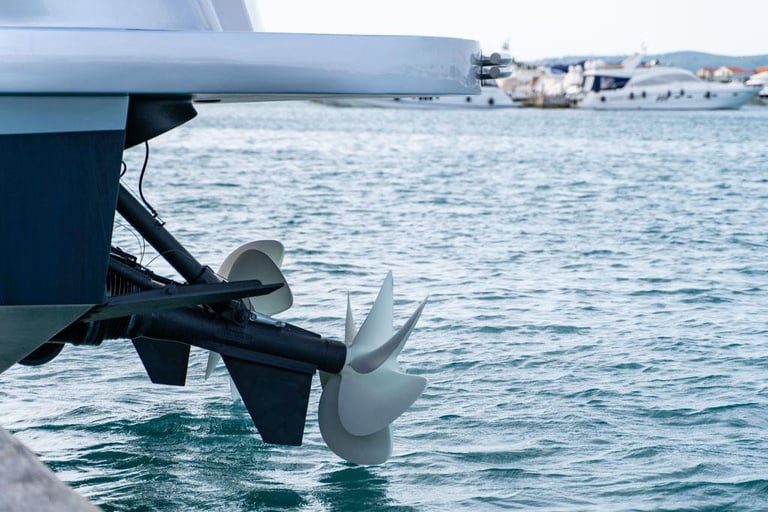
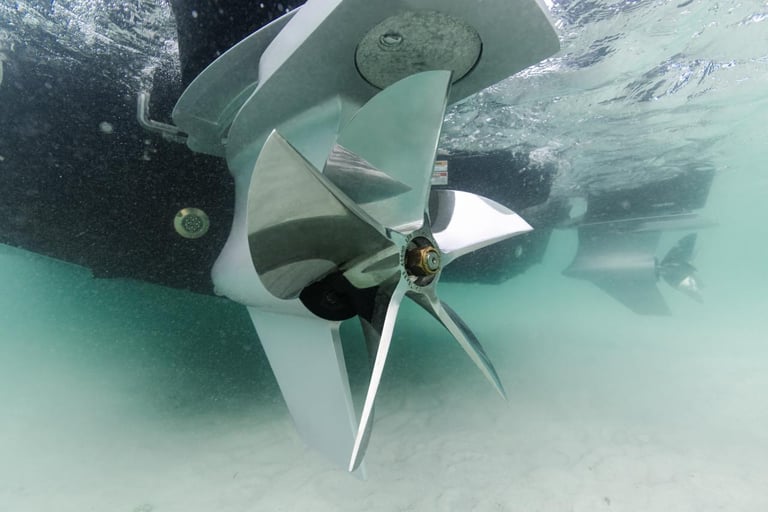
Boat propellers are vital components that play a significant role in the propulsion of watercraft. They operate on a simple yet effective principle: as the blades of the propeller rotate, they push water backward, resulting in thrust that propels the vessel forward. The design and construction of propellers are crucial as they dictate efficiency, speed, and overall performance of a boat. Most commonly, boat propellers are crafted from materials such as aluminum, stainless steel, or composite materials, each offering distinct advantages in terms of durability, weight, and cost.
The fundamental design of a propeller includes a central hub from which blades extend outward. These blades typically have a specific pitch, which describes the angle of the blade relative to the plane of rotation. The pitch influences how much water the propeller can displace with each rotation, thereby affecting the vessel’s speed and fuel efficiency. A higher pitch allows for better top-end speed, while a lower pitch can enhance acceleration and maneuverability.
Factors that impact propeller performance extend beyond just design. The size of the propeller, including its diameter and the number of blades, also plays a significant role. A larger diameter propeller can move more water and produce greater thrust, while additional blades can improve the smoothness of operation and reduce vibration. Furthermore, environmental conditions such as water density, current, and sea state must also be taken into account, as they can significantly influence thrust generation.
Ultimately, understanding boat propellers is crucial for maximizing maritime performance. By assessing blade design, pitch, diameter, and environmental factors, boat owners can select the most appropriate propeller that aligns with their operational needs, ensuring efficient propulsion and enhanced overall performance.
The Importance of Fuel Efficiency in Boating
Fuel efficiency is a crucial aspect that every boater should consider, as it directly impacts both operational costs and environmental sustainability. As the price of fuels continues to rise, optimizing fuel consumption becomes essential not only for the budgetary considerations of boaters but also for minimizing the ecological footprint associated with boating activities.
High-performance propellers play a significant role in improving a boat's fuel efficiency. By enhancing the total propulsion system, these propellers allow boats to operate at optimal speed with reduced energy expenditure. When a boat's propeller is correctly designed and matched to the engine specifications, it can significantly lower fuel usage during cruising. This efficiency is critical, especially for those who venture into long-distance voyages where fuel costs can accumulate rapidly.
Moreover, beyond the financial implications, fuel efficiency also has environmental benefits. Boaters are increasingly aware of their carbon emissions and the impact that boating can have on marine environments. High-performance propellers contribute to lower exhaust emissions by enabling engines to operate more efficiently, thereby reducing the overall environmental impact. This shift towards cleaner and more efficient boating options aligns with global efforts to protect aquatic ecosystems and promote sustainable practices.
Implementation of high-performance propellers can lead not only to enhanced fuel efficiency but also improve the overall boating experience. Boaters can obtain better speed and responsiveness while enjoying longer trips without the frequent need for refueling. Consequently, investing in high-performance propellers is not just a matter of enhancing performance, but also a vital strategy for cost-effective and environmentally responsible boating.
Enhancing Speed with High-Performance Propellers
High-performance propellers are an essential component in the optimization of a boat's speed. These specialized propellers are designed to enhance acceleration and achieve higher top speeds, making them a key consideration for boat enthusiasts and professional mariners alike. Their effectiveness is primarily due to unique characteristics that allow for improved hydrodynamic efficiency.
One of the notable features of high-performance propellers is their blade design. Typically, these propellers feature a thinner profile and increased pitch, which work in tandem to reduce drag and increase thrust. This combination allows the boat to achieve faster speeds with less engine power. Moreover, advanced materials like stainless steel or composite materials enhance strength while reducing weight, further improving the propeller's performance.
Different types of boats can significantly benefit from high-performance propellers. For instance, speedboats and racing vessels often utilize these propellers to maximize their speed capabilities. In racing scenarios, the ability to accelerate quickly can make a crucial difference in performance rankings. Similarly, fishing boats that navigate rapidly in pursuit of their catch can also achieve benefits from these specialized propellers, allowing for swift movements across varying water conditions.
In addition, high-performance propellers are not limited to specialized craft; many recreational boats can also install these performance optimizers. By equipping vessels with the right high-performance propeller, boaters can enjoy enhanced responsiveness and acceleration, ensuring a more thrilling experience on the water. Furthermore, the technological advancements in propeller design continue to evolve, allowing for even greater performance improvements that cater to the specific needs of various boating categories.
Smoother Handling: Navigating with Precision
High-performance propellers play a crucial role in optimizing the handling characteristics of a boat, significantly enhancing its overall navigation capabilities. One of the primary advantages these propellers offer is improved maneuverability. Unlike standard propellers, high-performance variants are designed with advanced aerodynamics and materials, which allow for quicker response times when steering. This improved responsiveness is especially beneficial in tight spaces or when making sharp turns, facilitating smoother handling that can make the boating experience more enjoyable.
Additionally, the design of high-performance propellers aids in maintaining stability during navigation. This stability is particularly evident in challenging conditions, such as rough waters or strong currents, where traditional propellers may struggle to maintain control. With a high-performance propeller, boats can achieve greater grip and control, allowing for more precise navigation. The enhanced stability not only contributes to safety but also fosters confidence in the operator, resulting in a more relaxed and assured boating experience.
Furthermore, the overall precision of navigation is enhanced through the use of high-performance propellers as they enable boats to maintain speed without sacrificing control. When facing variable environmental conditions, such as waves or wind, the refined design of these propellers helps in reducing drag and optimizing thrust. As a result, boaters can maintain their intended heading and speed, which is essential for both leisurely cruising and competitive racing. The effective integration of technology and design in high-performance propellers delivers remarkable improvements in maneuverability, responsiveness, and stability, ultimately leading to a superior boating experience.
Maximizing Overall Boat Performance
High-performance propellers play a pivotal role in enhancing various aspects of boating performance. One of the most noticeable benefits is the improvement in fuel efficiency. By optimizing the propeller design and materials, these propellers reduce drag and increase thrust, resulting in less fuel consumption. This not only leads to cost savings over time but also extends the range of your boating excursions, allowing for longer trips with fewer refueling stops.
In addition to fuel efficiency, high-performance propellers contribute significantly to the speed of the boat. The advanced engineering behind these propellers allows for greater water displacement and less cavitation, enabling faster acceleration and higher top speeds. Boaters looking to maximize performance will notice an immediate impact on their speed, allowing them to reach their destinations more quickly and enjoy more thrilling rides.
Handling is another area where high-performance propellers excel. These propellers are designed to provide improved maneuverability, whether in tight channels, during high-speed turns, or in adverse weather conditions. The enhanced thrust and directional control provided by high-performance propellers ensure that maintaining control is easier and safer, ultimately leading to a more enjoyable boating experience.
Furthermore, the integration of advanced materials and technologies in the construction of these propellers fosters durability and resilience. This longevity ensures that boaters do not have to frequently replace their propellers, further enhancing the overall boating experience. Manufacturers continue to innovate, producing propellers tailored for various types of boats, thereby allowing each boat to perform at its peak efficiency.
Incorporating high-performance propellers into your boating setup guarantees an overall enhancement in fuel efficiency, speed, and handling. Each of these elements contributes to a more effective and enjoyable boating experience, showcasing how essential these propellers are for maximizing overall boat performance.
Choosing the Right High-Performance Propeller
Selecting an appropriate high-performance propeller is crucial for optimizing the functionality and speed of your boat. Various factors should be considered to ensure that the propeller complements your vessel's specifications and intended use. One key aspect is the size of the propeller, which affects thrust and speed. Generally, a larger diameter can increase thrust, making it better for heavy loads, while a smaller diameter may enhance speed with lower resistance.
Another important factor is the pitch of the propeller. Pitch refers to the distance a propeller would move in one revolution if it were moving through a solid material, much like a screw. A higher pitch can allow your boat to achieve greater speed but may result in a slower acceleration. Conversely, a lower pitch can facilitate quicker acceleration and better handling, essential when navigating through tight spots. Knowing the trade-offs between pitch and speed can guide you in dialing in the right performance for your activities.
The material from which the propeller is made also significantly influences durability and performance. Common materials include aluminum and stainless steel; aluminum props are generally more affordable and lightweight but may not withstand high-speed performance as effectively as stainless steel, which offers increased strength and corrosion resistance. Therefore, depending on your boating environment—saltwater vs. freshwater—and frequency of use, choosing the right material is vital.
Additionally, reputable brands are critical for ensuring quality and performance. Researching high-performance propeller brands known for their reliability can help narrow down your options. Analysing user reviews and seeking expert advice can further assist in making an informed decision that aligns with your boating needs.
Case Studies and Testimonials from Boaters
The real-world impact of high-performance propellers can be seen through various case studies and testimonials provided by avid boaters who have integrated these specialized components into their vessels. One notable example comes from a recreational boater, Jim, from Florida. After switching to a high-performance stainless steel propeller, Jim reported a remarkable 15% increase in fuel efficiency during long runs. He noted that the enhanced design not only improved lift but also allowed for higher top speeds, significantly reducing his travel time to popular fishing spots.
Similarly, Claire, an experienced sailor based in California, shared her testimonial about her transition to a high-performance propeller engineered for her sailboat. After installing the new propeller, Claire observed that her sailboat reached its cruising speed more quickly, enabling her to better manage her schedule during racing events. The propeller offered superior thrust, which proved particularly advantageous when maneuvering in tight quarters. Claire's experience emphasizes how high-performance propellers do not just enhance speed; they also contribute to overall handling agility.
Moreover, a fleet manager for a commercial charter service illustrated the economic benefits of investing in high-performance propellers. By upgrading the propellers on their fleet of fishing boats, the service reported a reduction in fuel costs by approximately 20%, attributing this success to the improved efficiency and slip reduction. This investment not only translated to significant savings but also increased the amount of time the boats could spend on the water, thus boosting overall profitability.
These testimonials affirm the pivotal role that high-performance propellers can play in enhancing boating experiences. The collective insights from various boaters highlight not only the performance gains but also the economic viability and increased usability resulting from these innovative boat components.

Get in touch
Address
13 north street
Weihai Shandong China
Contacts
+86 156 8454 3412
yacht.business48@gmail.com